


Multimodal Prediction of Treatment Response in Bone Sarcomas in Children, Adolescents, and Young Adults
Bone Sarcoma Study Group
Bone sarcomas are rare, highly aggressive tumors that primarily affect children, adolescents, and young adults (AYAs). Despite intensive multimodal therapy, the prognosis is poor, and involvement of the musculoskeletal system leads to severe limitations in physical function and quality of life for those affected.

A key unresolved issue is the lack of reliable biomarkers for the early prediction of individual treatment response, which in turn limits the ability to tailor therapy to specific patients. At the same time, there is a lack of structured approaches for actively involving patients in clinical decision-making processes—such as prioritizing functional needs in daily life, adjusting treatment intensity to individual physical activity levels and tolerance, taking personal treatment goals into account (e.g., maintaining the ability to work, participation in social life), or the joint assessment of treatment benefits and side effect profiles in the interest of informed decision-making.

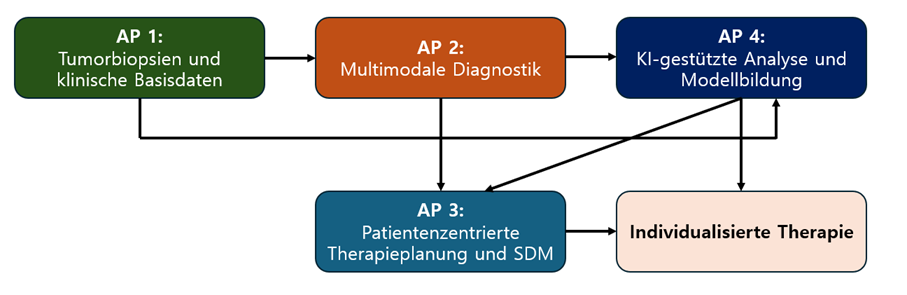
AP 1: Pre-treatment biopsies and baseline clinical data
Standardized collection of pre-treatment biopsies and structured clinical data collection at all six BZKF sites.
WP 2: Multimodal Diagnostics
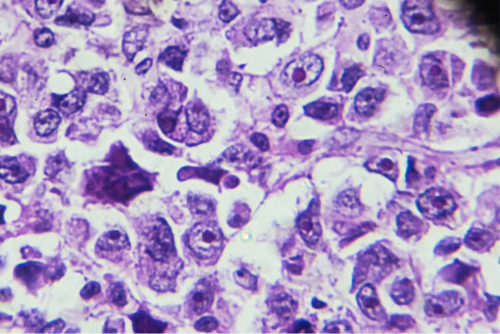
Systematic collection of digital histopathology data, multiparametric imaging (MRI, CT, X-ray), and circulating tumor nucleic acids (liquid biopsy) to identify predictive features.
WP 3: Patient-Centered Care and Shared Decision Making
Development of interactive, evidence-based decision aids to strengthen participatory clinical decision-making processes.
WP 4: AI-Supported Modeling
Development and validation of a predictive AI model for the early differentiation of responders and non-responders based on integrated multimodal data (histopathology, imaging, molecular markers).

| M1 | Start of Recruitment & Finalization of the Protocol | Completion of study protocols, start of patient recruitment, and biopsy collection |
| M2 | Preliminary AI model for histology (monomodal analysis) | First functional version of an AI model for analyzing digital tumor sections |
| M3 | Image integration completed | Completion of the evaluation of radiological data and its integration into the system |
| M4 | Start of model integration and training | Start of the integration of histological, radiological, and molecular data into the training model |
| M5 | Multimodal predictive model validated | Finalized, first validated version of the predictive AI model |

Early differentiation between responders and non-responders allows for individualized treatment adjustments and reduces treatment-related toxicity.
In cases of a good response, function-preserving surgeries can be planned more realistically; non-responders can be placed on intensified or experimental treatment regimens at an early stage.
The structured involvement of patients in clinical decision-making processes (shared decision-making) improves the quality of care and patient satisfaction.
Strengthening Bavarian centers within national and international networks such as COSS, CESS, and FOSTER through translational, methodologically research-oriented contributions.

The Bone Sarcomas Study Group is established as an interdisciplinary, multi-site research structure within the BZKF. All six BZKF sites are participating in order to achieve the case numbers required for valid analyses of these rare tumor entities.
The radiology subproject KISa (AI for the Analysis of Sarcomas) has already been launched at TUM as part of the RACOON infrastructure. Integration with the oncological real-world data integration platform (oRWDP) will take place shortly. Experts from pediatric and medical oncology, orthopedics, radiology, pathology, computer science, and molecular medicine are collaborating with the German Sarcoma Foundation, which serves as an active patient advocacy group.
Other Study Groups
- Acute Myeloid Leukemia (AML)
- Cancer of Unknown Primary (CUP)
- Endocrine and Neuroendocrine Tumors
- Hepatocellular carcinoma
- Lung Tumors
- Lymphoma
- Malignant Melanoma
- Breast Cancer
- Ovarian cancer
- Pancreatic cancer
- Primary and secondary malignant brain tumors
- Prostate cancer
- Tumor predisposition syndromes
- Urothelial carcinoma
- Soft tissue sarcomas
- CNS tumors in children and adolescents