

BZKF invests in the future: 600,000 euros for cancer research in Bavaria
For the fourth time, the BZKF is supporting six outstanding young scientists at Bavarian university hospitals. The Wilko Weichert Young Scientist Academy has invested around 2.7 million euros in cutting-edge clinical research since 2023. The selected projects are driving forward new diagnostic and therapeutic options for cancer in Bavaria - with the clear aim of bringing innovative approaches from the laboratory to the bedside more quickly.
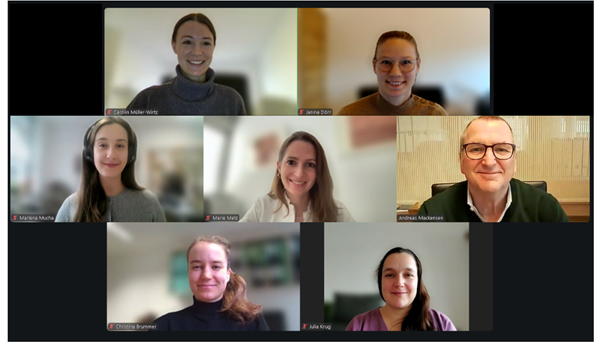
Six young scientists from the BZKF locations will each receive 100,000 euros from 2026 to implement their visionary research projects. The digital award ceremony on 27 November 2025 honored their commitment to better cancer medicine of tomorrow.
BZKF Director Prof. Dr. Andreas Mackensen emphasized the great importance of these projects for the direct benefit of patients and encouraged the young scientists to actively shape the future of the BZKF research groups.
The promotion of young talent is a decisive building block on the way to becoming a leading international center for patient-oriented cancer research in Bavaria. With the founding of the Wilko Weichert Young Scientist Academy, the BZKF has set an important milestone in this regard. The Academy networks young researchers across all locations and supports them on their scientific path in the long term - with exchange formats with established research groups, travel grants, annual retreats and a structured mentoring program that also includes targeted training for successful acquisition of third-party funding.
Dr. Johanna Enke, one of the recipients of the BZKF Young Scientist Fellowship 2025 from Augsburg University Hospital, explains her funded research project:
"The aim of INSIGHT Melanoma is to better understand how we can use state-of-the-art imaging to better understand the different responses of patients to immunotherapy and what role the immune system plays in this. By combining functional imaging and new blood analyses, we want to make these processes visible. I am delighted that the BZKF Young Scientist Fellowship has given me the opportunity to contribute this important issue to clinical research and it motivates me to continue my research work."
The BZKF is supporting the following six BZKF Young Scientist Fellows 2026 in their innovative research projects:
Dr. Marlena Mucha, University Hospital Augsburg, "Comparative analysis of the effects of DICER1 mutations on cell differentiation and chromatin structure."
Dr. Carolin Müller-Wirtz, University Hospital Erlangen, "The influence of FcγRIIa polymorphisms on efficacy and immune response in HER2-positive breast cancer."
Dr. Janina Dörr, LMU Klinikum München, "Development of CAR-T cells with novel PGE2-targeted receptors to enhance anti-tumor immunity."
Dr. Marie Metz, TUM Klinikum München, "AI-optimized risk mapping using tumor growth modeling and genetic profiling for individualized radiotherapy of glioblastomas."
Dr. Christina Brummer, University Hospital Regensburg, "PRACTiCE - Building a platform for real-world activity data of cancer patients to support clinical trials in training immuno-oncology."
Dr. Julia Krug, University Hospital Würzburg, "Overcoming anti-PD-1 therapy resistance by targeted treatment of non-responsive melanomas with mifepristone bioconjugates."
Further information on the research projects can be found at https://bzkf.de/f/forschung/young-scientist-fellowhip/