Translational research projects
Soft tissue sarcoma study group
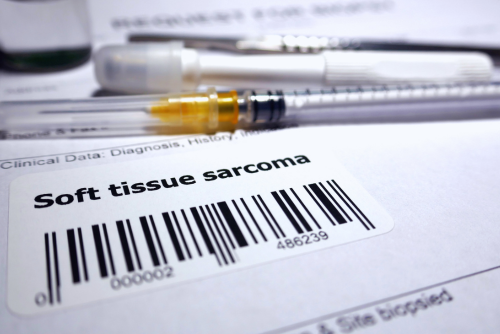
The group of soft tissue sarcomas (STS) comprises over 100 different histological subtypes. Systemic therapy is the standard treatment for patients in the metastatic stage. Local therapies (LT) are increasingly being used for patients with oligometastatic disease following a decision in multidisciplinary tumor boards. Systematic studies are lacking or are not suitable to prove the value of LT due to its complexity. The identification of predictive factors or biomarkers would be of great importance for a rational indication of LT in oligometastatic STS.

Patients with metastatic STS have an unfavorable prognosis with a survival of 12-24 months. The value of LAT +/- systemic therapy is unclear. Oligometastasis, a stage between localized and disseminated metastatic disease, is insufficiently defined.
Our study group investigated 246 patients with metastatic STS who received LAT according to tumor board recommendation between 2017 and 2021 in a first multicenter, retrospective study. The survival of the included patients was extraordinarily good with a 5-year overall survival of over 50%. In addition to the confirmation of known prognostic factors, such as a long treatment-free interval, there was a survival advantage in patients with treated metastases outside the lung. In contrast, rare histological subtypes and LAT beyond surgery and radiotherapy were associated with an unfavorable prognosis. In addition, we were able to show that the combination of LAT with complementary systemic therapy leads to improved progression-free survival (PFS) in patients aged ≤60 years with ≥4 treated lesions. This effect was particularly pronounced in treated metastases with a maximum diameter of >2 cm. Our results underline the importance of LAT and show in which subgroups the combination with systemic therapy appears to be particularly useful. At the same time, however, the results also highlight the need to identify further predictive biomarkers.

In our prospective observational study (DRKS00035722) initiated in January 2025, all patients with newly metastasized STS are included regardless of the chosen treatment strategy. The aim is to identify prognostic factors for the use of LAT and/or systemic therapy, with a particular focus on the course of the disease up to the first progression or recurrence. Our retrospective findings are to be validated prospectively without the limitations of the retrospective study design and the lack of a control group. In addition, we aim to develop a prognostic score based on clinical parameters and biomarkers for risk stratification after metastasectomy in the further course of the study.
The study is currently being expanded internationally via the Soft Tissue and Bone Sarcoma Study Group of the European Organization for Research and Treatment of Cancer (EORTC STBSG).
As part of the prospective study, patients treated by curative metastasectomy are also being examined with regard to the level of circulating tumor DNA (tumor-informed ctDNA). These analyses could be used to establish improved, non-invasive therapy monitoring. These markers could play a decisive role in the future, particularly in preoperative risk stratification before LAT in the oligometastatic stage.
In addition, analyses of primary tumor tissue and metastases using Spatial Transcriptomics and Whole Exome Sequencing (OLIGO-LMS) are currently being carried out on a subgroup of the retrospective cohort (leiomyosarcoma and curative LAT) in cooperation with the Omics/Genomics/Liquid Biopsy lighthouse. The aim is to identify biomarkers for indolent metastatic behavior and to investigate intratumoral heterogeneity (primary vs. metastasis). In addition, in collaboration with the AI and Bioinformatics lighthouse, previously unknown histopathological features are identified using machine learning methods and evaluated as potential predictive markers.

Within the first funding period, an initial retrospective study was conducted at the six BZKF sites. A total of 246 patients who received LAT according to the tumor board recommendation between 2017 and 2021 were included. These were examined with regard to survival and prognostic clinical factors. We found long-term survival in some of the patients (median overall survival >5 years). In addition to confirming known prognostic factors, such as a long treatment-free interval, we were able to show that extrapulmonary metastases can also be effectively treated locally. We also demonstrated the value of additional systemic therapy in patients <60 years of age with at least four metastases. This study was published 08/2024 in the European Journal of Surgical Oncology. A subgroup analysis of the most common histologic subtypes and pulmonary metastasectomy was published in Annals of Surgical Oncology 05/2025.
Our prospective registry study, including translational subprojects, has been running since January 2025. The following milestones are planned for this:
Months 1-24: Patient recruitment, international expansion
Months 24: Interim analysis
Months 24-36: Finalization of the translational projects (ctDNA, Spatial Transcriptomics)
Month 36: End of follow-up, publication

Definition of the role of local consolidation therapy +/- systemic therapy for patients with metastatic soft tissue sarcoma and development of therapy guidelines or a prognostic score
Collection and storage of tissue samples and imaging procedures with the aim of more precise assessment of an oligometastatic stage
International prospective registry study and constant exchange on clinical study activities, so that the inclusion of patients in studies at BZKF centers is also promoted
Implementation of clinical studies

Further study groups
- Acute myeloid leukemia (AML)
- Cancer of Unknown Primary (CUP)
- Endocrine and neuroendocrine tumors
- Head and neck tumors
- Liver carcinoma
- Lung tumors
- Lymphoma
- Malignant melanoma
- Multiple myeloma
- Breast cancer
- Ovarian carcinoma
- Pancreatic carcinoma
- Primary and secondary malignant brain tumors
- Prostate carcinoma
- R/R ALL
- Urothelial carcinoma
- CNS tumors in children and adolescents