
- The Omics/ Genomics/Liquid Biopsy lighthouse structure is intended to bundle the molecular biology methods available in the BZKF network in a decentralized manner and represent a central resource for all network members. Two core tasks of the lighthouse have been defined.
- 1) Implementation and methodological support of innovative research projects in the BZKF network, information on available methods and coordinated, harmonized roll-out across the network.
- 2) Provision of methods for innovative care (e.g. via MTBs).

Liquid biopsy and proteogenomics were identified as key site-specific expertise. The BZKF-wide provision of these technologies represents a unique selling point for the BZKF network and enables a) a significant approximation of the phenotype of specific malignancies through the integration of different OMICs levels including proteomics and b) longitudinal investigations that enable (therapeutic) strategies adapted to the course and tumor biology.
This requires extensive method-specific establishment work, particularly in the standardization of sample logistics and preanalytics, as well as preliminary regulatory work in order to introduce these methods into healthcare practice in the future. This is to be established and implemented in innovative "pilot projects" with a high impact, in order to then be available in the network.

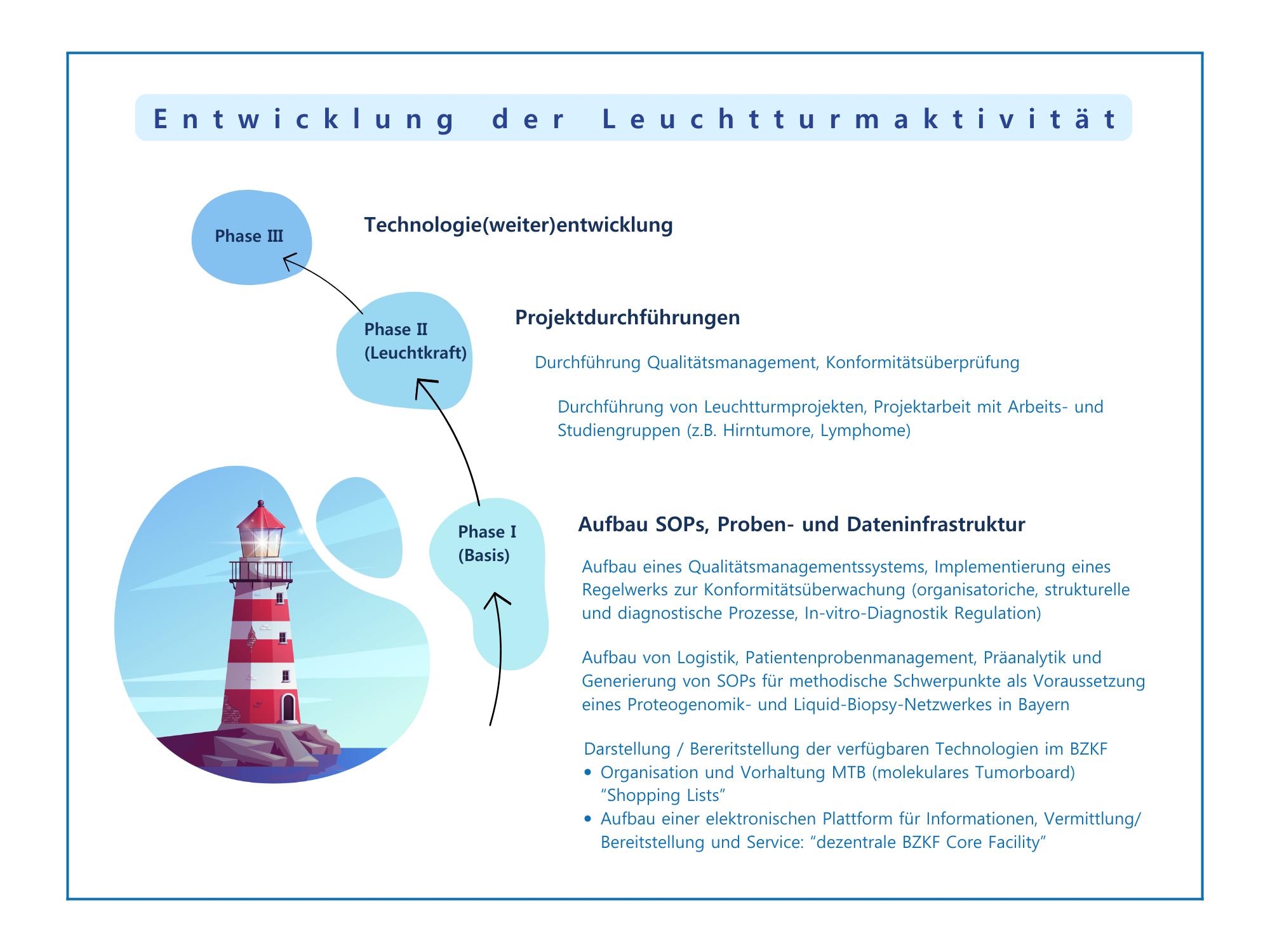

- Provision of technologies available in the network for comprehensive innovative care - MTBs as an innovative clinical "docking point" for innovative technologies
- Provision of specific technologies (focus on liquid biopsy and proteogenomics) for study groups/individual projects
- Initiation of highly competitive specific pilot projects (specific entities/questions)
- Establishment/(further) development of OMICS technologies for which there is a need in the BZKF network

Spokesperson: Prof. Rainer Claus(rainer.claus@uk-augsburg.de), Augsburg University Hospital
Deputy Spokesperson: Prof. Bernhard Küster, TUM Klinikum München